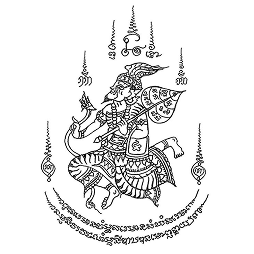
Ruesi (The Hermit Sage)
The forest-dwelling ascetic revered as the forefather and teacher of the entire Sak Yant tradition. The Ruesi embodies wisdom, mastery of the sacred arts, and the blessing of the lineage of masters.
A lineage of protection, spirituality, and sacred geometry carved into the fabric of time. Explore the deep roots and profound meanings behind the ancient tradition of yantra tattooing.
The practice of Sak Yant traces its origins back over two millennia, intertwining indigenous animist beliefs with Brahmanism and early Buddhism. Initially conceived as a method to impart magical protection to warriors heading into battle, these sacred marks were believed to grant invulnerability, strength, and the favor of the gods.
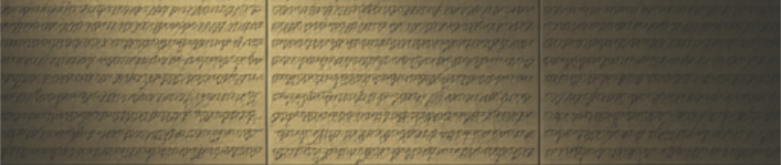
Rooted deeply in the 'Khom' script, an ancient alphabet derived from Pallava, the prayers and incantations embedded within the geometry are not mere decorations. They are active spiritual conduits, requiring a master (Ajarn) who has dedicated their life to the study of Vipassana meditation and ancient texts to properly breathe life into the design.
THROUGH TIME
From whispered animist rites to a living global tradition — the long journey of the sacred Yant.
Long before temples, protective markings tied to spirits and the forces of nature were carved into the skin of the people of mainland Southeast Asia.
A sacred alphabet derived from the ancient Pallava script gave the tradition its written form — used to inscribe the Pali prayers and incantations that give each Yant its power.
Yantra geometry merged with Buddhist philosophy and Vipassana meditation, and monks became the keepers of the magical texts and Kata.
Soldiers sought yants for invulnerability, strength, and courage, trusting the sacred geometry to carry them safely through battle.
Masters known as Ajarn preserve the unbroken lineage, and seekers travel from around the world to receive an authentic, hand-applied Sak Yant.
THE SACRED SCRIPT
Written in the ancient Khom script — a Khmer-derived alphabet — every line and character is a prayer, never a mere decoration.
The script carries the Kata — sacred incantations in the Pali language of Theravada Buddhism, with Sanskrit — awakened by the master during the ceremony.
SACRED FIGURES
Beyond pure geometry, revered sages, deities, and animals each carry their own blessing and protective force.
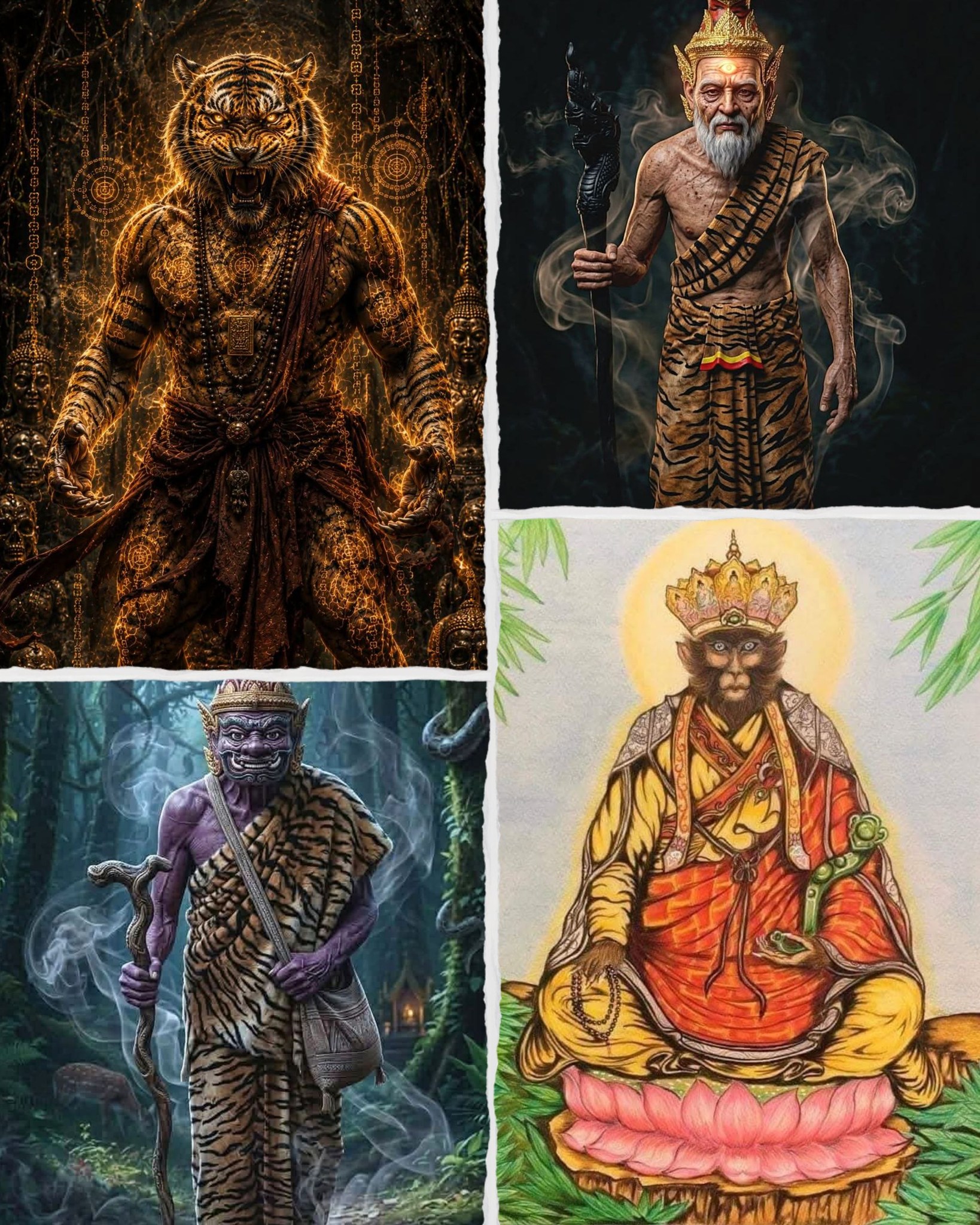
The forest-dwelling ascetic revered as the forefather and teacher of the entire Sak Yant tradition. The Ruesi embodies wisdom, mastery of the sacred arts, and the blessing of the lineage of masters.
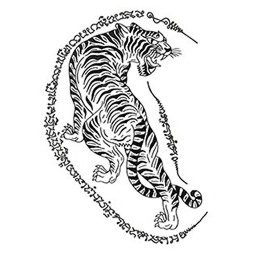
The embodiment of raw strength, authority, and fearlessness. The tiger grants command over rivals and the courage to face any threat. It is often sought by those who desire authority, protection from danger, and the resilience to overcome obstacles or enemies.
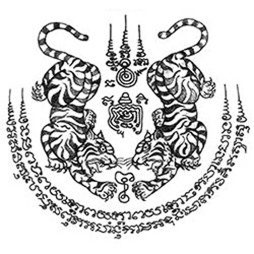
Two tigers doubling the power of the single Yant — commanding respect, dominance, and unshakable confidence.
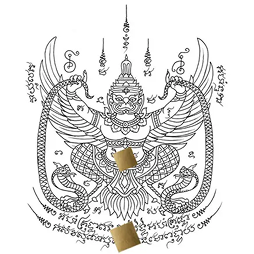
The divine eagle and mount of Vishnu. A symbol of high status, authority over others, and fierce protection from enemies.
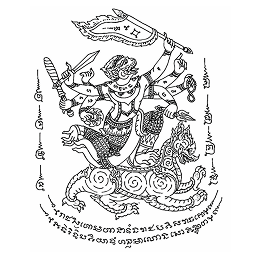
Hanuman is the monkey god of the Ramayana, known for his immortality, agility, and supernatural strength. Bestows bravery, loyalty, agility, and victory in conflict to those who carry his image.
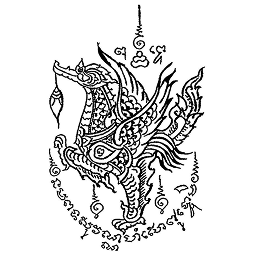
Grace, charm, and Metta — loving-kindness. The Hong attracts favor, affection, and harmonious relationships.
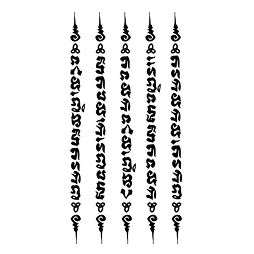
The Five Lines. Each line represents a specific magical spell offering protection from unjust punishment, reversing bad constellations, protecting against black magic, fostering success, and enhancing charisma.
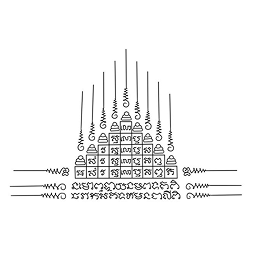
The Nine Peaks. Representing the nine peaks of Mount Meru, the mythical mountain of the gods. It is considered the most sacred Yant and is often the first given, offering universal protection.
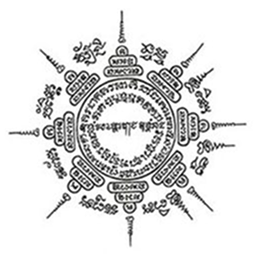
The Eight Directions. Incorporating eight mantras to offer protection whichever direction you travel. It is a powerful geometry designed to ward off danger from all sides.
THE CEREMONY
A Sak Yant is never rushed. The master enters a meditative state, applies the design entirely by hand, and at the close recites the Kata — blowing the sacred breath into the Yant to awaken its power and blessing.
A long metal rod tipped with a fine needle point — the authentic tool Sak Yant masters have used for centuries, traditionally made and kept by the Ajarn himself.
The rod is dipped in sacred ink and tapped point by point, every mark placed with intention rather than by machine.
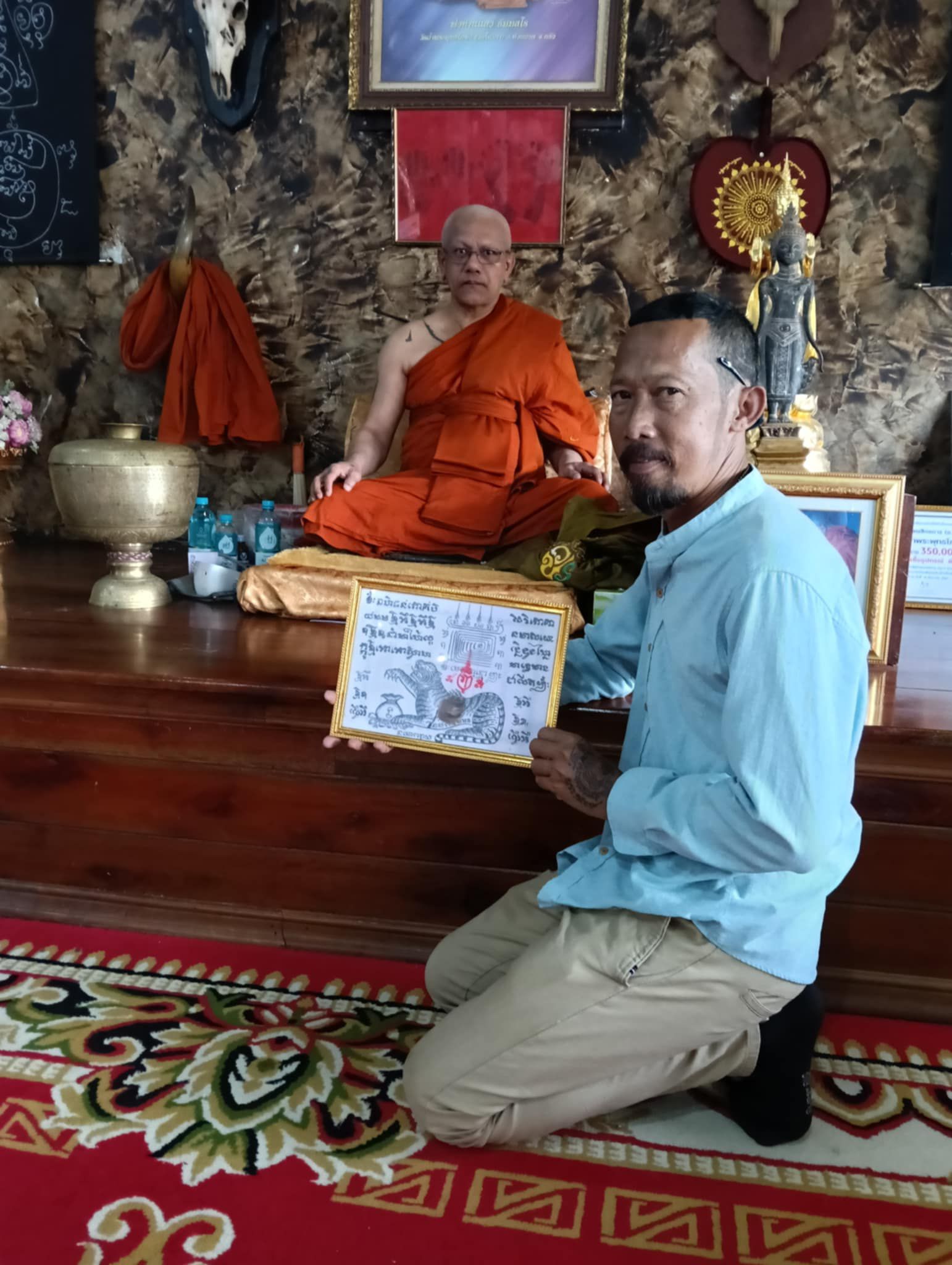
THE ANNUAL RITE
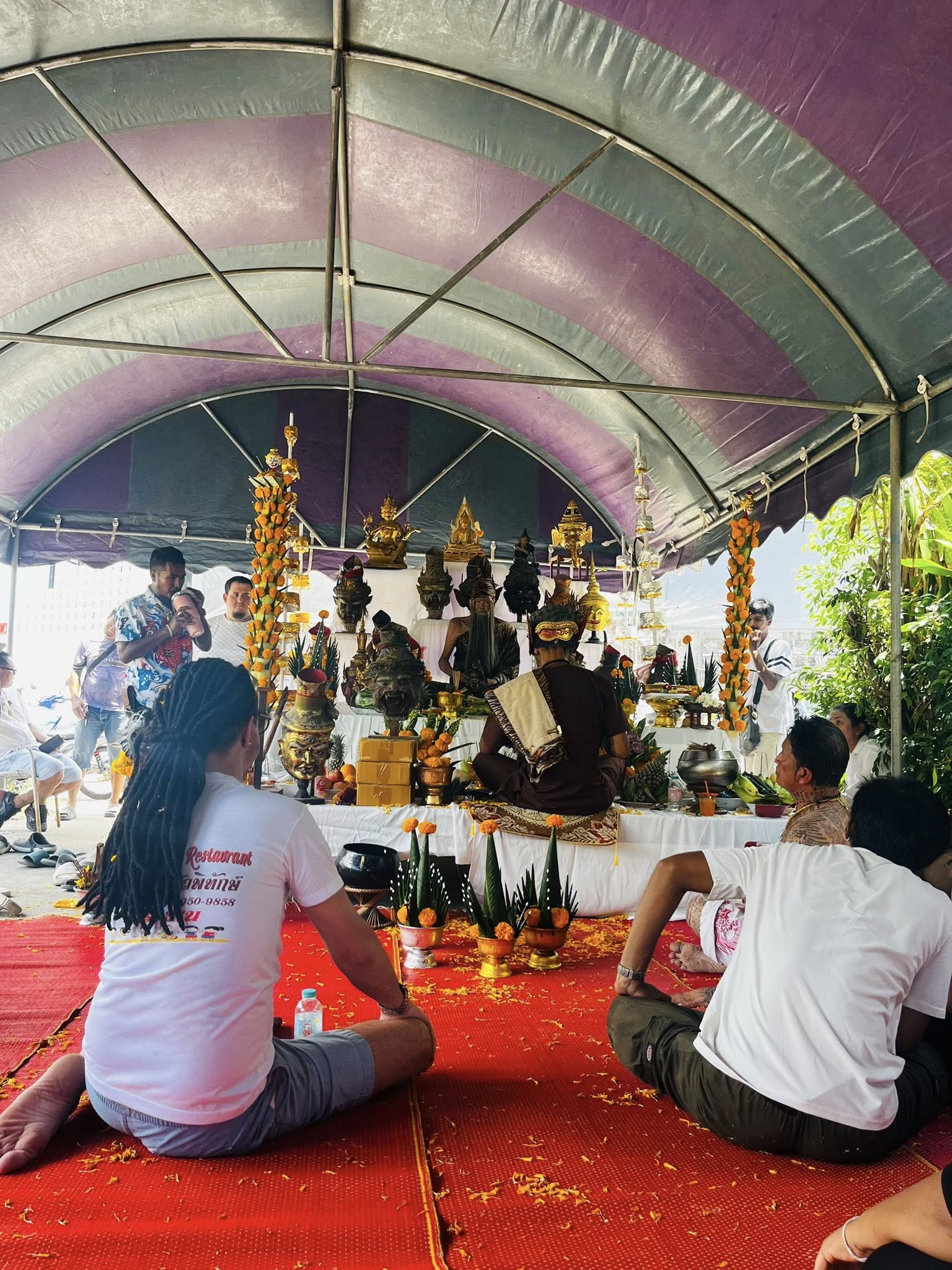
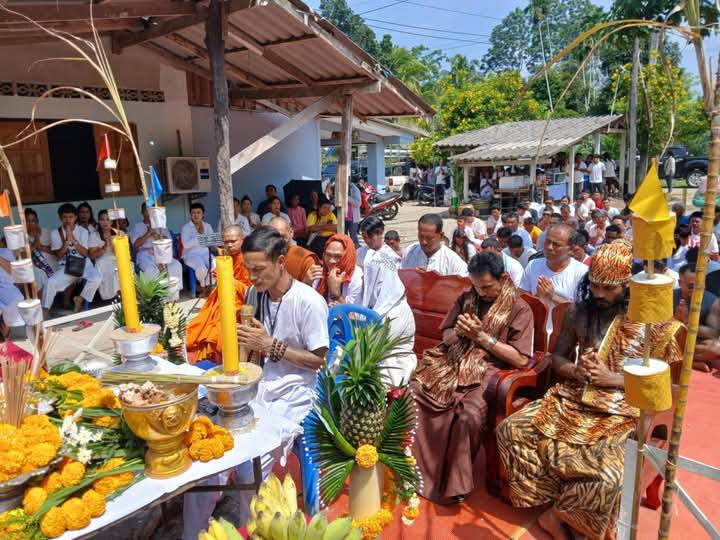
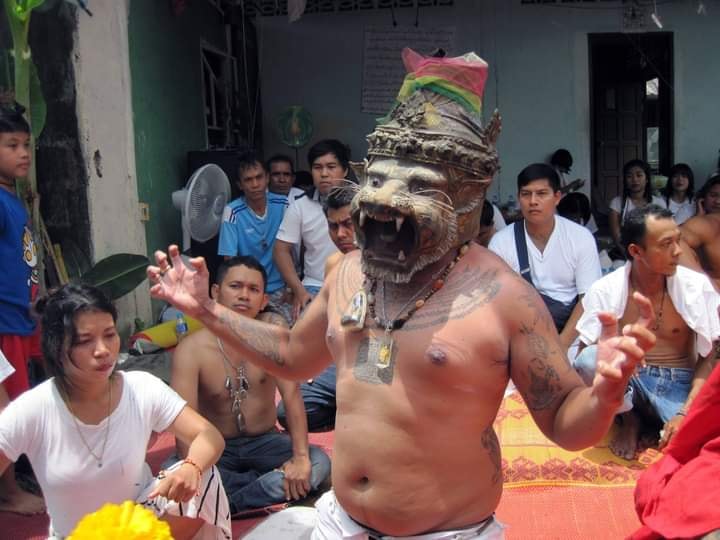
Once a year, devotees return to honor their master and the lineage of teachers before him. In this gathering of gratitude, the Yant is re-empowered and the sacred bond between Ajarn and recipient is renewed — keeping the blessing alive for the year to come.
THE PRECEPTS
The magic of a Sak Yant is not unconditional. It requires a commitment to a righteous path. To maintain the purity and power of the blessing, the wearer must adhere to specific spiritual rules set forth by the Ajarn.
Carry the tradition with you. Reach out to receive your own authentic Sak Yant from Ajarn Pol.
INQUIRE ABOUT YOUR OWN SAK YANT